
Loading Property Genie

What Is the Proclamation of Sale (POS) and Why It Matters in Malaysia

PROPERTY GUIDE

Written by Fazrina Fezili

What Is the Proclamation of Sale (POS) and Why It Matters in Malaysia

proclamation of sale malaysia, proclamation of sale, auction property malaysia, bank auction property, court auction malaysia, proclamation of sale document, proclamation of sale meaning, property auction terms malaysia, reserve price malaysia auction, auction property tips malaysia, e-lelong malaysia, conditions of sale malaysia, auction property process malaysia

If you’ve ever browsed through auction property listings in Malaysia, you’ve probably seen the term Proclamation of Sale often abbreviated as POS appearing alongside details of the property.

Many first-time buyers or investors might think it’s just another piece of “auction paperwork” and focus only on the reserve price. But in reality, the POS is a legally binding document that can reveal everything you need to know about the property before you bid from its legal status, title details, encumbrances, and payment terms to buyer obligations.

In Malaysia, buying an auction property without reading and understanding the POS is like signing a contract without knowing what you’re agreeing to it’s risky, and it can cost you financially.

This article will break down:

  • What the Proclamation of Sale is
  • How it works under Malaysian property law
  • Why it’s crucial for property buyers
  • How to read and use it effectively before bidding
  • Common mistakes to avoid

By the end, you’ll see why the POS is not just “paperwork” but one of the most important tools in your property buying decision-making process.

What Is the Proclamation of Sale (POS)?

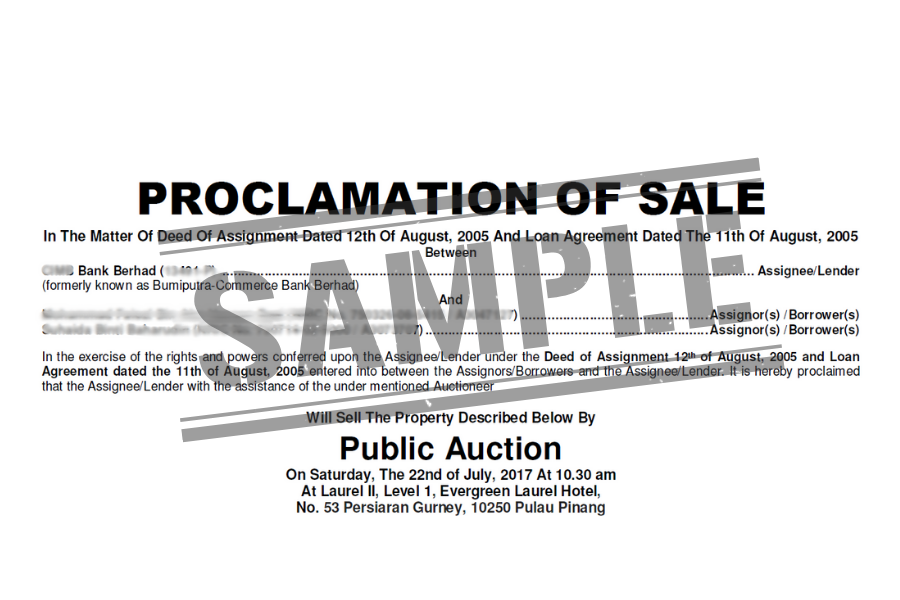
In Malaysia, the Proclamation of Sale (POS) is an official legal document that sets out all the details of a property that is going to be sold via public auction. It is usually prepared by the bank’s appointed solicitor (for loan default cases) or by the relevant authority (for court or land office auctions).

The POS acts as a public notice to potential buyers, detailing important information such as:

  • Property description and address
  • Reserve price (starting bid)
  • Auction date, time, and venue (physical or online)
  • Land title details (freehold, leasehold, strata, etc.)
  • Encumbrances or restrictions (if any)
  • Name of the current owner/borrower
  • Terms and conditions of the sale

The POS is prepared by the bank’s solicitor in the case of loan default auctions or by the court/land office in judicial sales. It is published in newspapers, auctioneer websites, and property portals to ensure the public is aware of the sale.

Legal Framework Behind the POS in Malaysia

The POS is not just a random form, it’s part of the auction process regulated by Malaysian law.

Two main legal provisions govern property auctions in Malaysia:

National Land Code 1965 (NLC)

  • Governs land ownership, title transfers, and auction procedures for properties with individual or strata titles.
  • Under the NLC, the POS must include accurate title details and any restrictions in interest.

Rules of Court 2012

  • Applicable in judicial auctions (court-ordered sales).
  • Requires the POS to be filed with the court and made available for public inspection.

This means that the POS is legally enforceable once the auction is conducted under its terms, buyers are bound by the conditions stated inside.

Key Information You’ll Find in a POS

Here’s what you’ll typically see in a Malaysian Proclamation of Sale:

1. Property Details

  • Full address and property type (e.g., double-storey terrace house, apartment unit, shop lot).
  • Land area and built-up size.
  • Title number (e.g., HS(D) 12345, Lot No. 6789).
  • Tenure: Freehold or Leasehold (with balance lease years stated).
  • Land use category (e.g., Residential, Commercial, Industrial).

2. Ownership and Legal Status

  • Name of the registered proprietor (current legal owner).
  • Any restrictions in interest (e.g., “Only Bumiputera can purchase”).
  • If the property is under a Master Title, this will also be indicated.

3. Encumbrances

  • Outstanding loans (charge to the bank).
  • Caveats (claims by third parties).
  • Court orders, if applicable.

4. Auction Details

  • Auction date and time.
  • Venue (physical auction hall or eAuction platform like e-Lelong).
  • Reserve price (minimum bid).
  • Auctioneer’s contact details.

5. Terms and Conditions of Sale

  • Deposit amount – usually 10% of the reserve price, payable before or on auction day.
  • Balance payment period – usually 90 or 120 days from auction date.
  • Buyer’s responsibility to take vacant possession.
  • “As is where is” condition clause.

Why the POS Is Important for Auction Property Buyers

proclamation of sale malaysia, proclamation of sale, auction property malaysia, bank auction property, court auction malaysia, proclamation of sale document, proclamation of sale meaning, property auction terms malaysia, reserve price malaysia auction, auction property tips malaysia, e-lelong malaysia, conditions of sale malaysia, auction property process malaysia

1) It Tells You the Legal Status of the Property

The POS clearly states whether the property is freehold or leasehold, whether there are restrictions in interest (e.g., only Bumiputera can own), and whether it is an individual title or strata title. This information is crucial because some restrictions may affect your eligibility to own the property.

2) It Lists Encumbrances and Liabilities

One of the most important sections in the POS is the list of encumbrances—for example:

  • Caveats (legal claims by third parties)
  • Unpaid quit rent or assessment fees
  • Charges or liens over the property

In most auction sales, the property is sold “as is where is” meaning the buyer may be responsible for settling some outstanding dues. The POS helps you know exactly what you might be inheriting.

3) It States the Reserve Price

The reserve price is the minimum price at which bidding will start. This is your starting point for budgeting and deciding if the property is worth pursuing. If the property doesn’t sell at the first auction, the reserve price is often reduced in subsequent auctions, which you can track through updated POS documents.

4) It Contains the Terms of Sale

The POS outlines important terms such as the deposit amount (usually 10% of the reserve price), the balance payment period (typically 90 or 120 days), auctioneer’s conditions, and buyer’s responsibilities post-sale. These terms are legally binding once you win the bid, so you must read and understand them before taking part in the auction.

Heads-up: Always read the Conditions of Sale (COS) alongside the POS for complete terms and responsibilities.

How to Get a Copy of the Proclamation of Sale in Malaysia

You can obtain the POS through several channels:

  • Auction listing portals such as PropertyGenie, PropertyGuru, or other auction sites
  • Bank auction departments (for loan default cases)
  • Auctioneers’ websites (for physical or online auctions)
  • Law firms appointed by the bank or court

Tip: Always get both the Proclamation of Sale (POS) and the Conditions of Sale (COS) before bidding. The COS has more detailed obligations.

Tips for Using the POS Effectively Before Bidding

  • Check the property title details – Ensure there are no restrictions that will prevent you from owning it.
  • Understand the encumbrances – Factor in any unpaid bills or legal claims into your total cost.
  • Do a site inspection – Even if the POS says the property is occupied, physically visiting can help you gauge condition and renovation costs.
  • Consult a lawyer – If you don’t fully understand any part of the POS, get legal advice before bidding.

Common Mistakes Buyers Make Regarding the POS

  • Skipping the fine print: Many bidders focus only on the reserve price and ignore the conditions of sale.
  • Not checking the title type: his can lead to ownership eligibility issues later.
  • Assuming the property is free of debt: Some liabilities can still fall on the new owner.

The Proclamation of Sale (POS) is far more than a legal formality, it’s your roadmap to understanding an auction property’s real value and risks.

In Malaysia’s auction property market, where “as is where is” is the norm, the POS is your best protection against unpleasant surprises. By studying it carefully, verifying the information, and seeking legal advice when needed, you can turn auction opportunities into smart investments instead of costly mistakes.

If you’re looking for updated auction listings and expert property guides, visit propertygenie.com.my, your trusted platform for navigating Malaysia’s property market.

Other Article:

Share :

.

Related Article

Thinking about your mortgage?

Use our loan calculator

See what you can afford

Article Highlights

proclamation of sale malaysia

proclamation of sale

auction property malaysia

bank auction property

court auction malaysia

proclamation of sale document

proclamation of sale meaning

property auction terms malaysia

reserve price malaysia auction

auction property tips malaysia

e-lelong malaysia

conditions of sale malaysia

.

Latest Guides

Properties You May Like