
Written by Fazrina Fezili
The Belanjawan Madani 2026, presented by Prime Minister Datuk Seri Anwar Ibrahim, is one of Malaysia’s most comprehensive fiscal plans to date. It is more than just an annual financial statement, it is a roadmap to strengthen economic foundations, improve public infrastructure, and promote inclusive growth for all Malaysians.
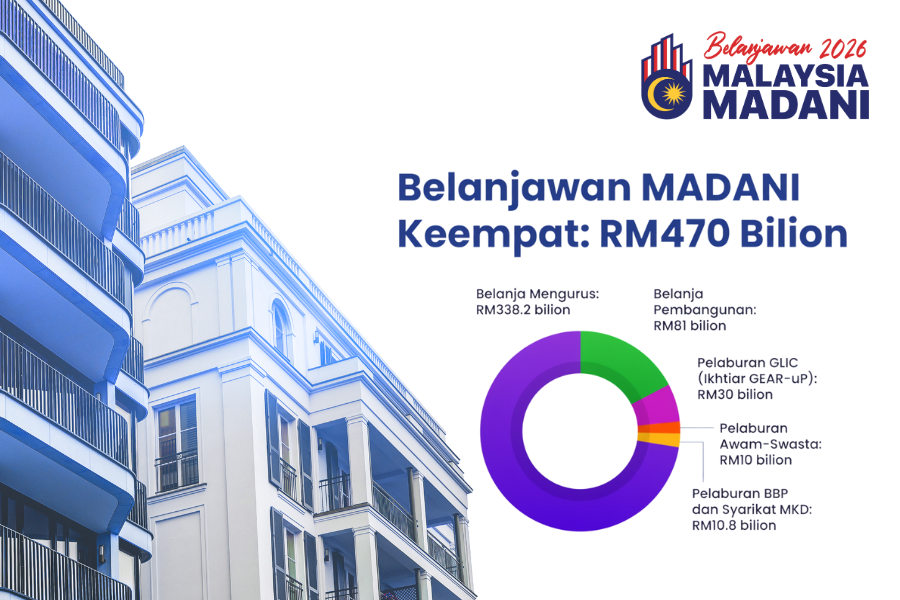
With a total allocation of RM470 billion, including RM81 billion for development, the Budget underscores the government’s commitment to build a sustainable, equitable, and digitally empowered Malaysia. For the property sector, it outlines clear strategies to boost affordable housing, urban redevelopment, infrastructure modernization, and digital transformation, all of which directly influence property values, homeownership opportunities, and investment sentiment.
↑ 2.6% increase from 2025 allocation
A central component of Belanjawan Madani 2026 is its RM81 billion in development expenditure, aimed at building and maintaining Malaysia’s physical foundation such as roads, housing, drainage, and utilities.
For urban dwellers, especially in Kuala Lumpur, the budget provides RM300 million to DBKL (Kuala Lumpur City Hall) for the maintenance and upgrading of public housing (PPR) buildings.
This includes improvements to:
The government also created an internal DBKL fund of RM500 million, dedicated to upgrading old urban infrastructure and residential amenities. Out of this, RM200 million is earmarked for market and hawker centre regeneration, enhancing community commerce spaces and local economies.
Beyond Kuala Lumpur, RM27 billion has been allocated nationwide for roads, bridges, and drainage systems. These projects may not sound glamorous, but they directly influence:
The combination of improved physical infrastructure and community redevelopment underlines Malaysia’s long-term vision: growth with livability making cities not just bigger, but better.
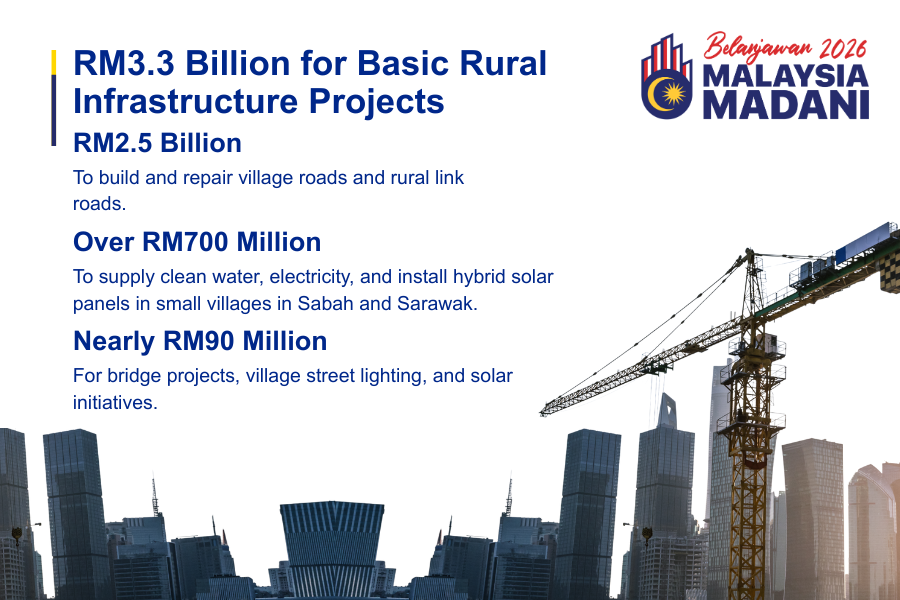
Housing affordability remains one of Malaysia’s biggest socio-economic challenges. Belanjawan Madani 2026 tackles this through targeted repair funding, construction cost control, and administrative efficiency.
The Ministry of Housing and Local Government (KPKT) receives RM6.088 billion, reflecting the government’s continued focus on public housing.
This allocation supports:
This effort improves housing safety and extends the lifespan of Malaysia’s large stock of public flats, especially in older neighborhoods.
Rising construction costs have pressured developers, especially those delivering affordable housing. The government’s targeted subsidies and price controls for critical materials aim to stabilize this.
Additionally, import cost monitoring via Customs and the Centralised Screening Complex (CCTV) is expected to reduce leakages and manipulation in building material imports.
For developers, this translates to:
Starting 2026, the national e-Invoicing system will be fully implemented across all sectors, including property transactions. Together with a stamp duty self-assessment system, this will:

Urban renewal takes a strong position in Belanjawan Madani 2026. The government recognizes that Malaysia’s historic districts, particularly in Kuala Lumpur, hold economic and cultural potential if properly restored.
Under Khazanah Nasional’s urban investment initiative:
DBKL will channel RM200 million for hawker centre and public market upgrades. This initiative supports local traders, promotes tourism, and enhances Kuala Lumpur’s image as a modern, livable, and culturally rich city.
Urban regeneration tends to raise the value of adjacent properties due to:
This approach supports the Madani principle economic growth that preserves cultural identity.
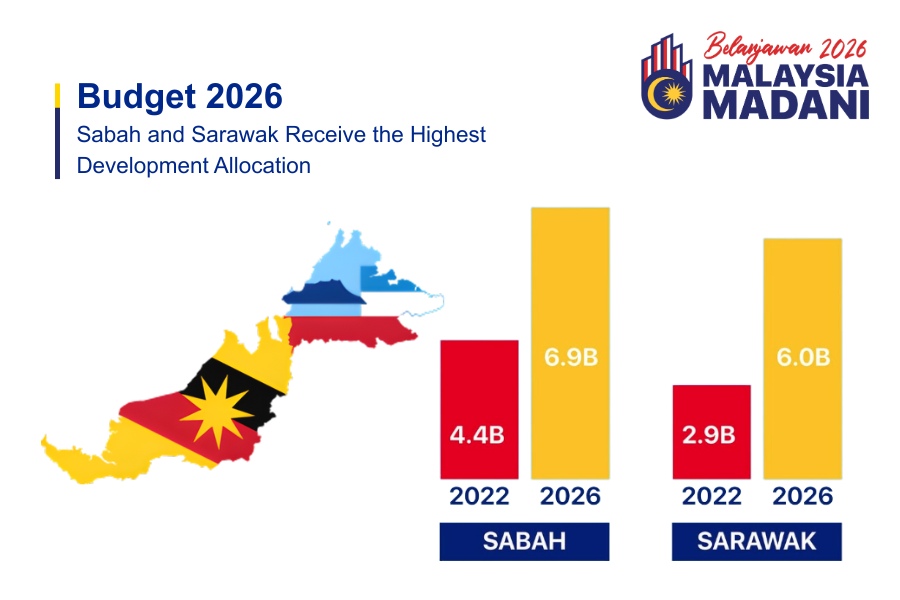
For the first time, Sabah and Sarawak receive record allocations in Budget 2026, a strong signal that the federal government is serious about balanced regional development.
Development Allocations
These projects will unlock new land corridors, enabling industrial and residential development along previously underdeveloped routes. Improved connectivity also means better job mobility, supporting local economies and reducing rural–urban migration pressures.
Rising material costs and procurement inefficiencies have long troubled Malaysia’s property sector. Belanjawan Madani 2026 introduces several mechanisms to control inflation, enforce transparency, and strengthen fiscal discipline.
The government allocates RM700 million to strengthen enforcement and integrity agencies:
The goal is to reduce corruption risks and cost leakages in public procurement.
By requiring electronic documentation across project pipelines, the e-Invoice system will reduce under-declaration and enhance pricing transparency. Together with the Fiscal Responsibility Act, these reforms support a more sustainable and accountable construction sector.
Digitalization remains a major theme in Budget 2026. By integrating technology into public services and tax administration, Malaysia aims to create a smarter, faster, and fairer system for both citizens and businesses.
The MyDigital ID platform expected to reach 15 million users by 2026 will serve as a single identity for digital public services. Complementing this, Kiosk MADANI outlets will be installed nationwide to improve access to government services, especially in rural areas.
The GovTech system will streamline project approval and monitoring, reducing bureaucracy in development projects, a key benefit for property developers managing approval timelines.
Tax exemptions for luxury vehicles in duty-free zones like Langkawi and Labuan will now be capped at RM300,000 to prevent misuse. This reflects a broader principle of fair taxation and responsible incentives balancing growth with social equity.
The Belanjawan Madani 2026 is more than a fiscal document, it’s a roadmap for economic inclusivity and sustainable growth. By strengthening housing infrastructure, regional connectivity, and financial governance, it lays the foundation for a resilient property market that benefits both urban and rural Malaysians.
The Belanjawan Madani 2026 underlines Malaysia’s commitment to balance fiscal discipline with social well-being. With strong allocations to housing, infrastructure, and digital governance and a firm stance against corruption, this budget provides the foundation for a property sector that is not only profitable, but equitable and sustainable.
As Malaysia modernizes its cities and expands development into Sabah and Sarawak, the property landscape is entering a new phase, one defined by inclusivity, accountability, and opportunity for all.