
Panduan Bandar di Malaysia
Kuching merupakan salah satu lokasi paling dinamik di Malaysia. Data transaksi untuk kawasan ini mungkin tersedia di bawah klasifikasi atau penamaan kawasan yang berbeza. Terokai senarai hartanah semasa dan statistik pasaran yang lebih luas di bawah.
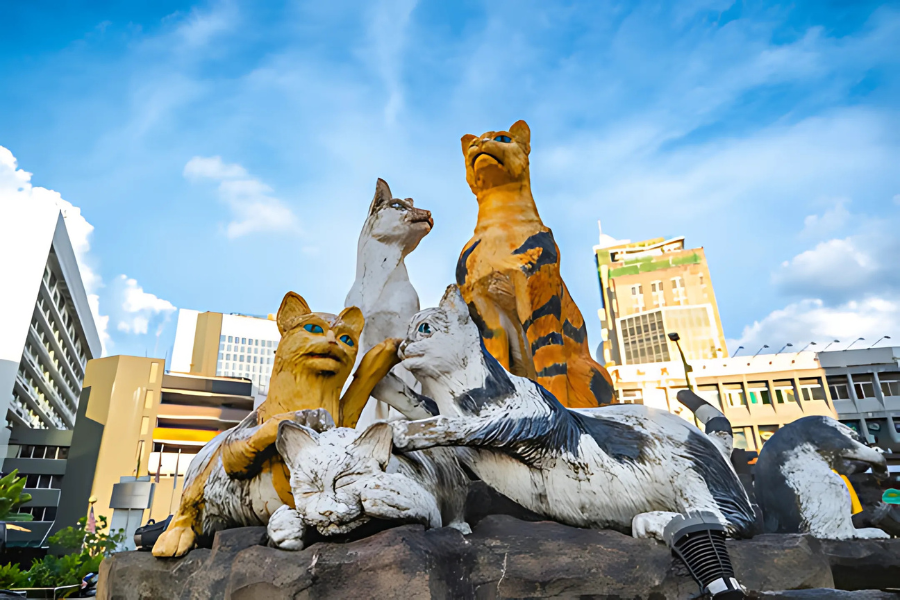
Kuching, the capital city of Sarawak on the island of Borneo, is one of Malaysia’s most charming and livable cities. Nestled along the banks of the Sarawak River, Kuching is the administrative, commercial, and cultural centre of the state. The name "Kuching" is believed to be derived from the Malay word kucing (cat), a symbol embraced by the city with cat statues and a dedicated Cat Museum.
Unlike the high-density, fast-paced environments of Kuala Lumpur or Johor Bahru, Kuching offers a slower, more relaxed lifestyle while still being a vibrant hub for commerce, tourism, education, and governance in East Malaysia. With its blend of modern development and rich cultural heritage, Kuching appeals to residents, investors, expatriates, and tourists alike.
Kuching lies in the southwestern part of Sarawak, near the South China Sea coast and the border with Indonesia’s West Kalimantan. While geographically more remote from Peninsular Malaysia, Kuching serves as the principal gateway into Borneo’s rainforests, national parks, and tribal cultures.
By Air:
Kuching International Airport (KCH) is the fourth busiest airport in Malaysia and a key air travel hub for East Malaysia. It offers:
By Road:
Kuching is the southern starting point of the Pan Borneo Highway, a multi-billion ringgit infrastructure project aimed at improving connectivity across Sarawak and Sabah. Once completed, it will significantly reduce travel time between major towns and cities in Borneo.
Waterways:
While river transport is not the primary means of commuting today, the Sarawak River remains a vital part of Kuching’s identity. River cruises and water taxis offer scenic views of the city skyline and access to riverfront villages.
Kuching is undergoing a wave of infrastructural upgrades under the Post-COVID Development Strategy (PCDS) 2030 and Sarawak’s Digital Economy blueprint.
A major development is the Kuching Urban Transportation System (KUTS), which includes Southeast Asia’s first Autonomous Rapid Transit (ART) powered by hydrogen fuel. The ART is expected to reduce traffic congestion and offer clean, efficient public transport.
Kuching has been selected as a pilot Smart City under the Sarawak Digital Economy Strategy. Initiatives include:
Free high-speed public Wi-Fi zones
With a metropolitan population of over 700,000, Kuching is the most populous city in Sarawak and among the largest urban areas in East Malaysia. The city is ethnically diverse, consisting primarily of:
Urban development in Kuching balances modernisation with environmental sustainability, guided by the Sarawak government's Green Agenda.
Kuching’s property market is known for its affordability, land availability, and steady demand. It is popular among first-time homeowners, retirees, and Sarawakian diaspora returning to settle.
Kuching’s economy is supported by a combination of traditional sectors and emerging industries. It contributes significantly to Sarawak’s GDP and is the administrative and commercial heart of the state.
Key Sectors:
The city is also pushing to become a hydrogen economy leader, with hydrogen fuel production and infrastructure being piloted in Kuching.
Kuching is a regional education centre in Borneo with a wide selection of public universities, private colleges, and international schools.
These institutions draw students from Sabah, Kalimantan, and even West Malaysia.
Kuching is well-equipped with public and private healthcare facilities, making it a key medical service centre in Borneo.
Government Hospitals:
Private Hospitals:
Medical tourism from Indonesia, particularly Pontianak and Kalimantan, is growing due to the quality and cost of care.
Tourism and Attractions
Kuching is a rising tourism destination, offering a unique blend of culture, nature, and urban comfort.
Top Attractions:
Events and Culture: